


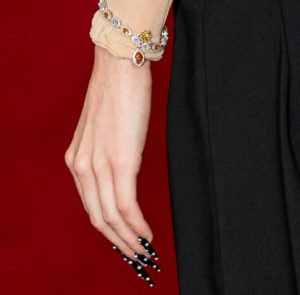



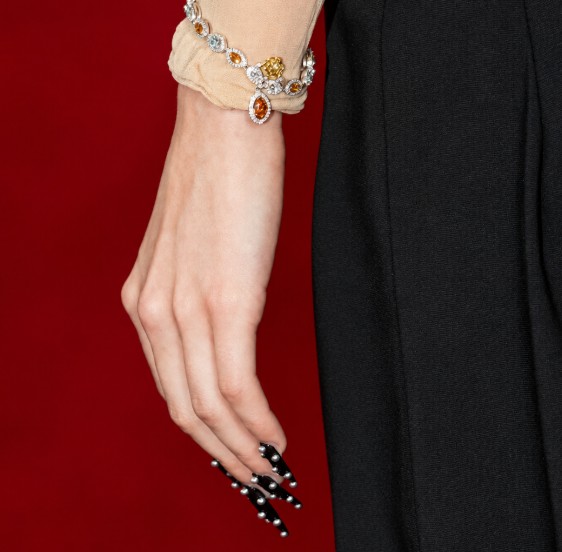
For generations, jewellery was often connected to occasions: pearls for formal events, diamonds for milestones, statement pieces for evenings. Contemporary style is increasingly moving away from those fixed ideas. Jewellery is becoming less about following a dress code and more about creating an individual visual language.
For Fairness Magazine readers, this shift reflects something happening across fashion more broadly. Personal style is becoming more fluid, expressive and less dependent on traditional definitions of luxury.
Building a Jewellery Wardrobe
Thinking about jewellery as a “wardrobe” can change the way we buy it. Instead of collecting unrelated pieces, consider how different designs work with the clothes, colours and silhouettes you already wear.
A sculptural earring might transform a simple black dress. A coloured gemstone can interrupt an entirely neutral outfit. A delicate necklace can introduce detail without competing with architectural tailoring.
Brands such as Rose Joy Jewellery work within this space, exploring sterling silver, gemstones, pearls and decorative forms that can be incorporated into different approaches to styling.
The question becomes less “Is this fashionable?” and more “How would I make this part of my own style?”
Colour Can Be More Personal Than Symbolism
Gemstones have centuries of symbolism attached to them, but those traditions do not need to determine what someone chooses.
Sapphire, topaz, amethyst, agate, pearls and other stones each introduce their own colour, texture and relationship with light. Someone might choose blue because it reminds them of the sea rather than because of a gemstone’s traditional meaning. Another person might repeatedly wear a particular stone simply because its colour works beautifully against their skin or wardrobe.
That personal interpretation can ultimately become more meaningful than following established rules.
Silver, Light and the Body
Jewellery should also be considered in movement.
Rose Joy uses 925 sterling silver within its collections, alongside stones including sapphire and moissanite. Reflective materials behave differently depending on their surroundings: polished silver catches daylight, gemstones respond to changes in illumination, and earrings continually change position as the wearer moves.
This makes jewellery particularly interesting from a fashion perspective. It is not simply an object placed on the body; the body continually changes how that object is perceived.
Statement Doesn’t Have to Mean Excess
A statement piece does not necessarily need to be large.
An unusual proportion, unexpected stone, asymmetric design or sculptural silhouette can command attention without overwhelming an outfit. The strongest styling often comes from understanding where the focal point should be.
If the earrings are visually complex, reducing other jewellery can give them space. If a necklace is intended to dominate, a restrained neckline can create a stronger composition.
The same principle used in fashion applies to jewellery: contrast can often be more effective than accumulation.
Look Beyond the Photograph
When buying jewellery online, appearance should only be the beginning.
Check the material composition, dimensions, fastening and construction. For earrings, consider their weight. For rings, look carefully at sizing. With gemstone jewellery, examine how the stones are set. With sterling silver and plated pieces, read the recommended care instructions.
These practical details determine how comfortably and frequently something will actually be worn.
Buy for the Person You Are, Not Just the Moment
Perhaps the most useful test before buying jewellery is imagining the piece several years from now.
Would you still wear it?
That does not mean avoiding dramatic design. In fact, an unconventional piece can have greater longevity than something purchased purely because it reflects a temporary trend.
The difference is emotional connection.
Rose Joy Jewellery’s concept of “Sterling Stories” offers an interesting way of thinking about this relationship. A designer creates the object, but the wearer gradually gives it context.
A ring purchased independently might later represent a particular period of confidence. Earrings worn during an important event can become connected to that memory. A necklace brought home from a journey may eventually matter more because of where it has been than what it originally cost.
Fashion constantly changes. Personal objects have the ability to travel through those changes.
Perhaps that is why jewellery remains so powerful: we wear the design, but eventually we give it the story.


